The Process flows of Direct Democracy
On this page we express in detail how the processes will change to direct democracy. Looking at Process maps and core rules to enable direct Democracy
We don't just call out for change, we define the root cause and offer a practical solution (PAGE UNDER CONSTRUCTION)
- You want to know exactly how your voice will turn into real action — our process flow shows the clear steps from you setting the country’s priorities all the way through to seeing results on the ground.
- You’re tired of vague promises with no timeline — this page lays out the simple, logical journey so you can see how we move from today’s broken system to one where you’re actually in control.
- You worry big changes could cause chaos or delays — our process is designed with careful testing, public sign-off and parallel running so everyday services keep working while the new system is built.
The Process Flow is the practical roadmap that makes direct democracy work in the real world.
We start by defining the purpose of government, then design the system so that you set the nation’s strategic goals through a straightforward national referendum. Politicians and civil servants then focus solely on delivery, with clear KPIs, regular public reporting and full accountability.
Every step is transparent, time-bound and designed to minimise disruption. You will see exactly where we are in the journey and how your input shapes the outcome. No more guessing. No more endless political games. Just a clear, honest process that puts power where it belongs — with you.
The only constant in existence is change
Flow 0 - The overview of how Direct Democracy will work
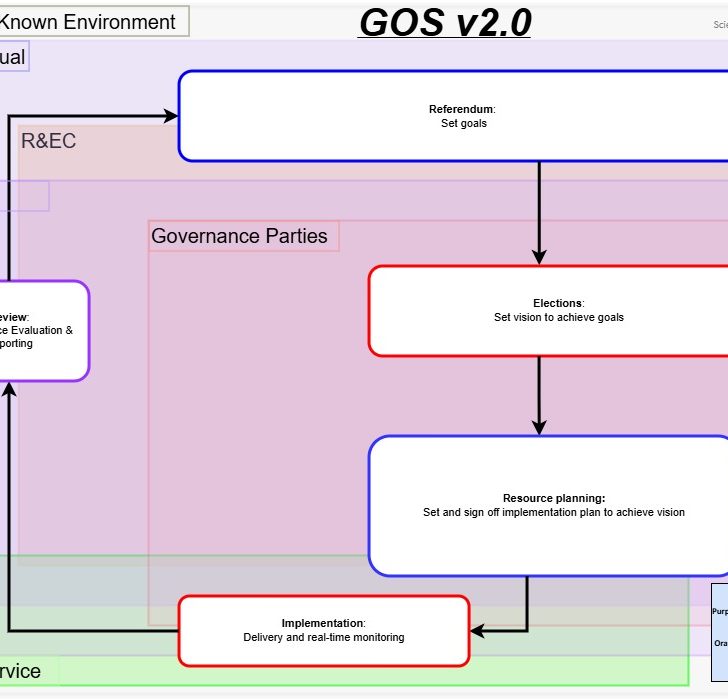
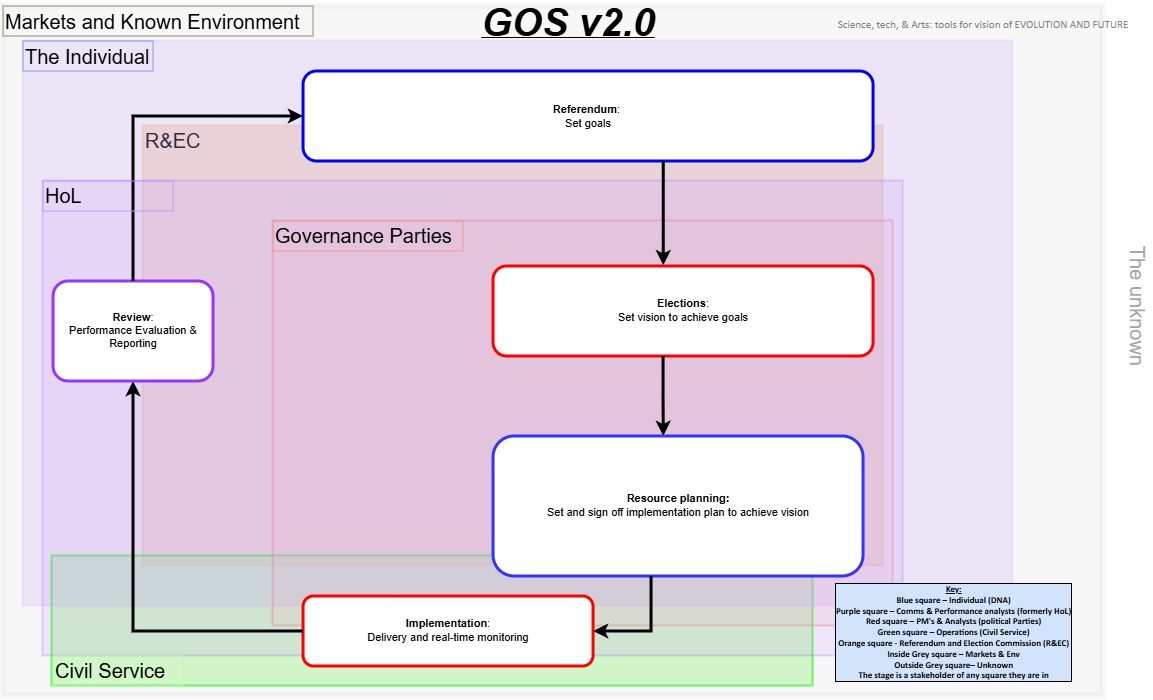
Below is a snapshot of the core principle steps of Direct Democracy.
All aspects of life are a cycle and understanding that the alignment of Power, Reward, Risk, Responsibility, and Accountability in these steps means we understand HOW a structure should be formed. By segregating Strategy setting from Obectives creation (i.e. what are our goals, and seperately how we get there)
By segregating these two aspects of governance, we align Power back to the people and accountability back to those who chose to serve us.
Understanding Process Maps
At The Process Party, we recognise the vital role that process maps play in organising our government. These visual representations provide a clear overview of our procedures, ensuring that everyone understands their responsibilities and how they fit into the larger governance framework. By utilising process maps, we are able to minimise risks, enhance compliance, and streamline Government's operations effectively.
Each process map outlines critical workflows, allowing us to identify potential bottlenecks before they become a problem and highlight areas for improvement, keeping Government lean and ever evolving. This proactive approach not only elevates our service delivery but also fortifies our commitment to quality and accountability. In a rapidly changing environment, having a solid foundation of documented processes is essential for maintaining PRRRA and achieving operational excellence.
By embracing process maps as a key tool within our governance structure, The Process Party is dedicated to fostering a culture of continuous improvement within Government whilst keeping the stability needed to ensure quality delivery. We invite you to explore how these valuable resources contribute to our Governing ethos and ultimately enhance your experience with the Government that serves you.
Flows 0 to 5, the full breakdown
Below are the full list of Process maps for Direct Democracy, feel free to download and explore the maps to fully understand how all areas of Governance are aligned to serve you, the people.
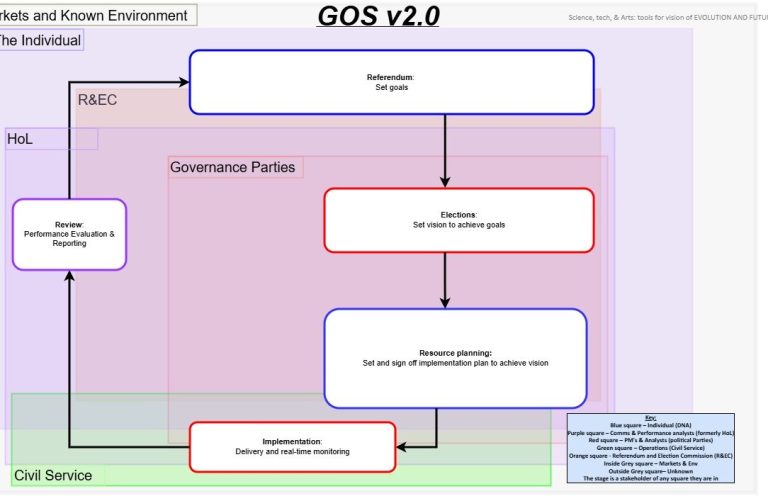
This is the overview of the entire process of Governance, each step is catagorised by the core function needed to ensure governance aligns to what the people need and demand
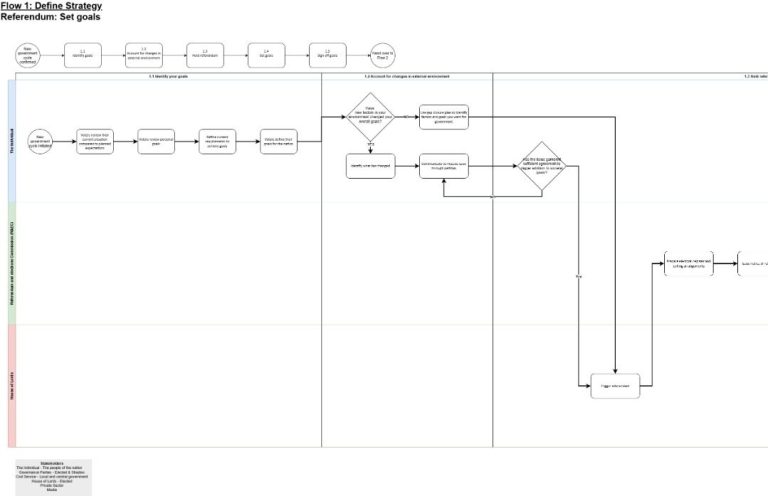
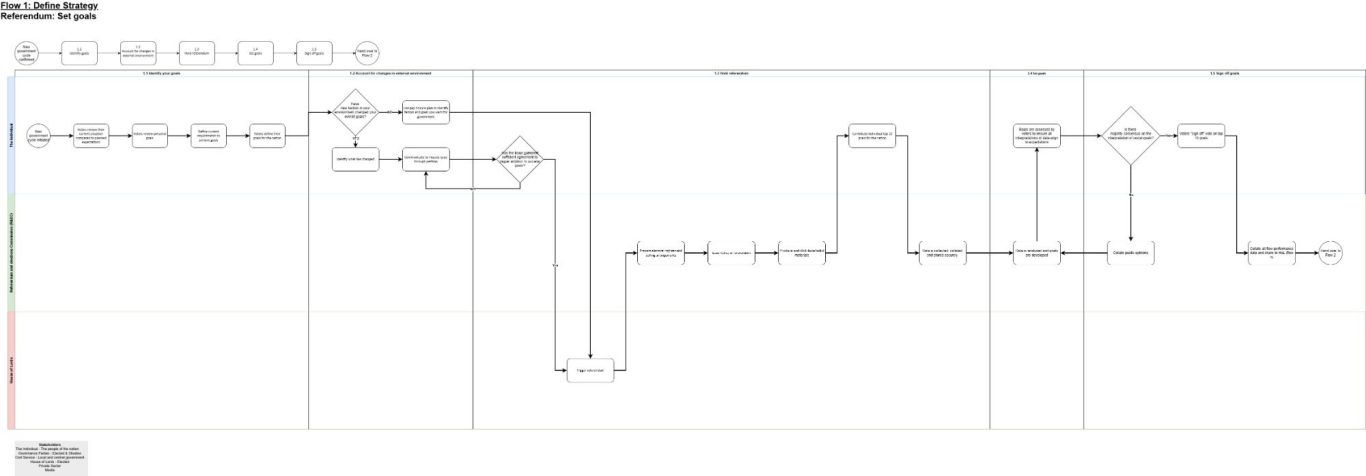
This is the core process for the people to set the goals of the nation
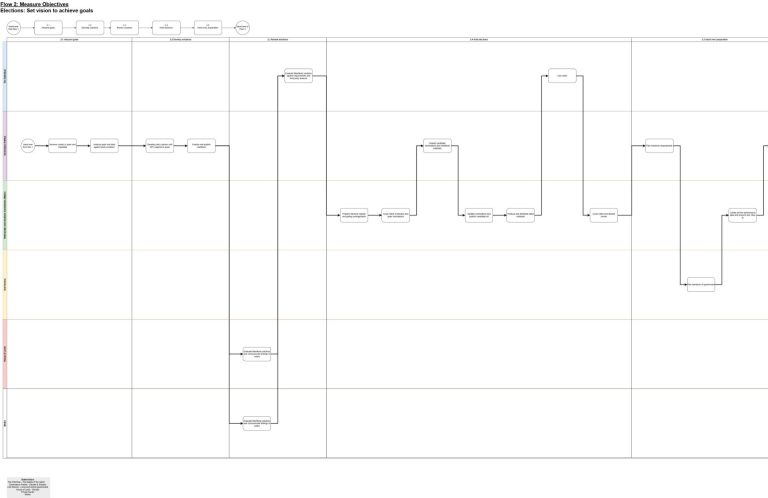
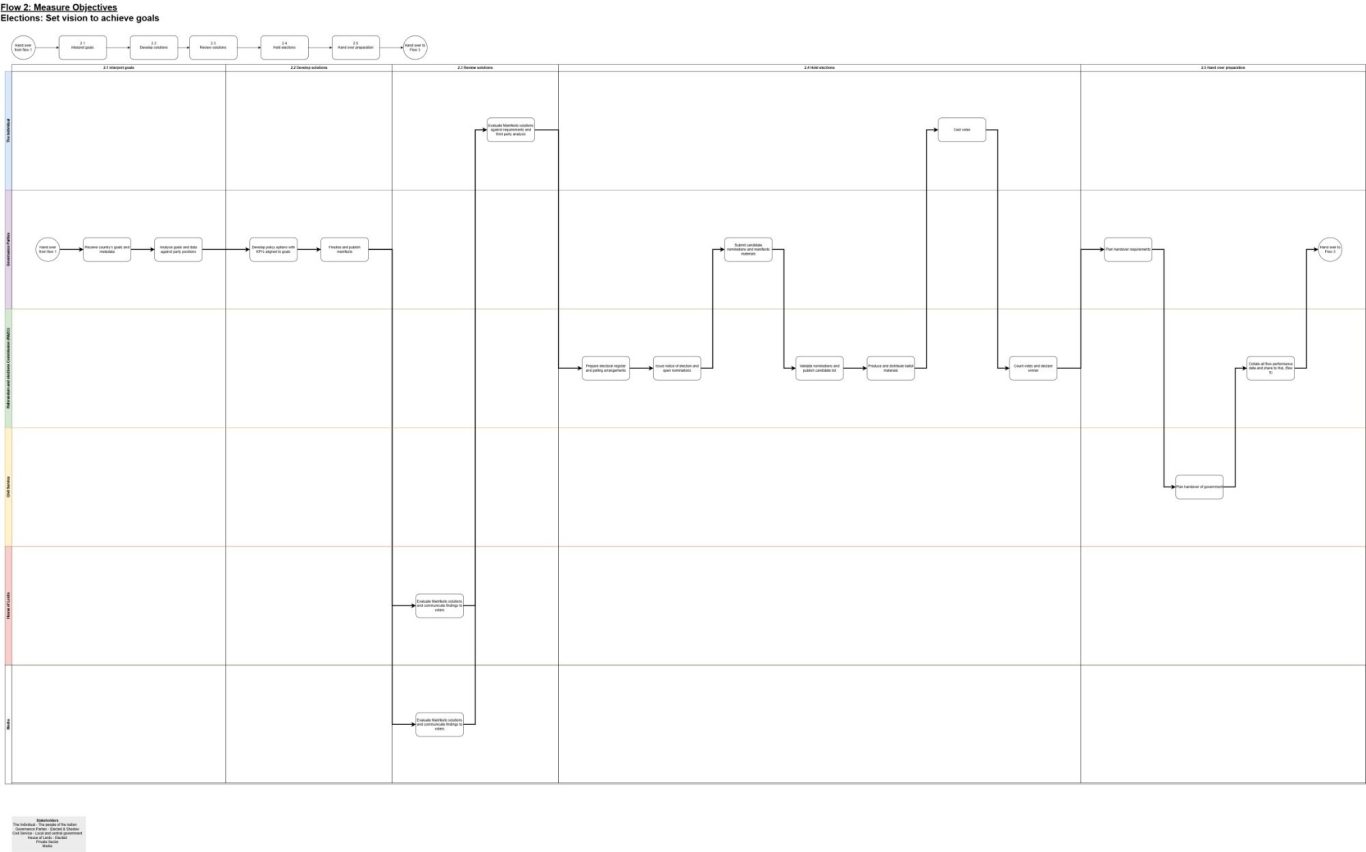
Once the goals are set, the governance parties set out HOW they plan to achieve our goals in their manifestos and the people select the best option
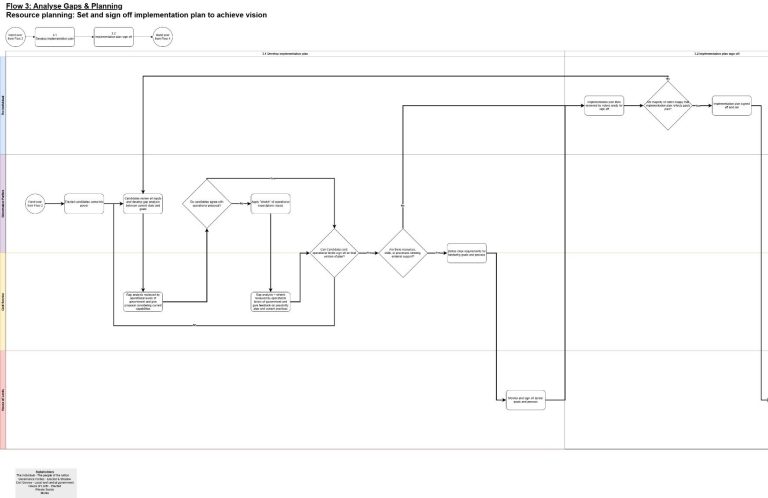
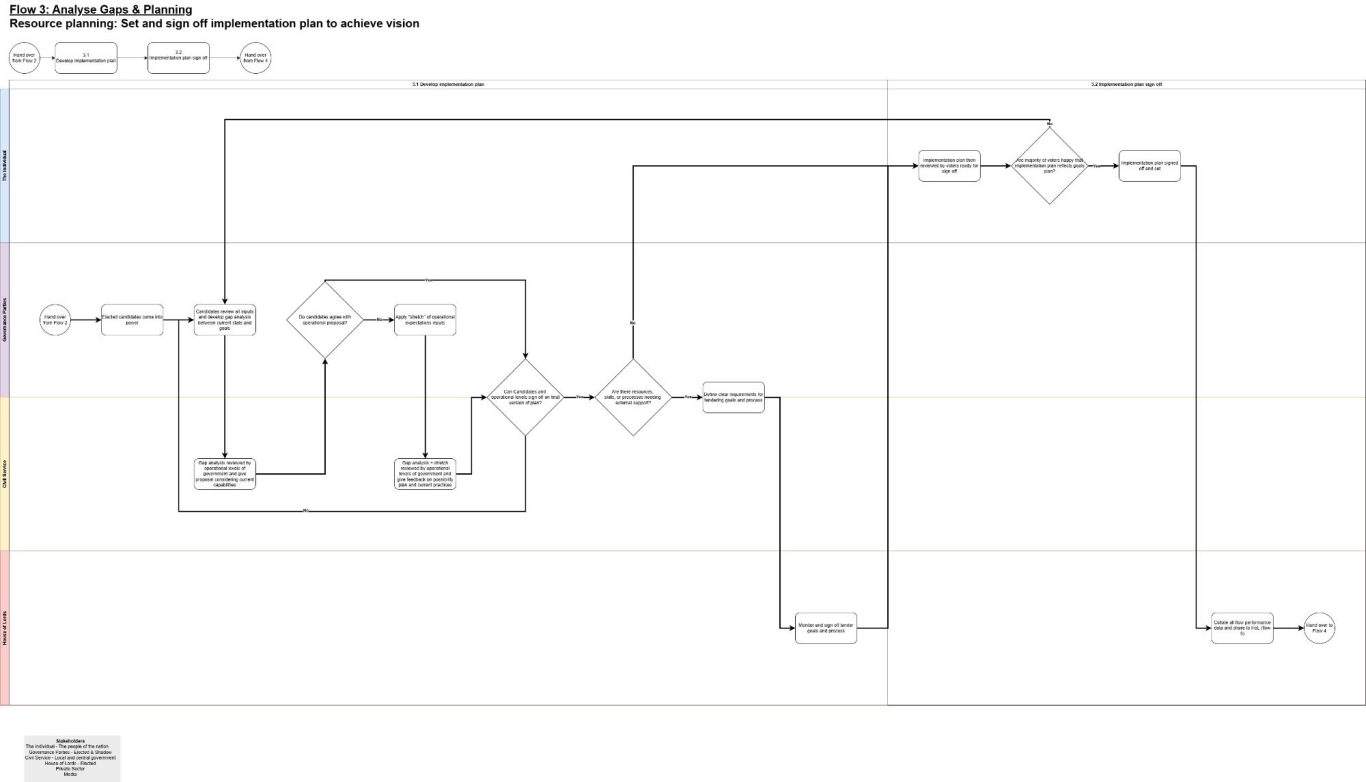
Once in Power, the Governance party work with the civil service to plan out how they turn objectives into action and set the action plan which the people sign off
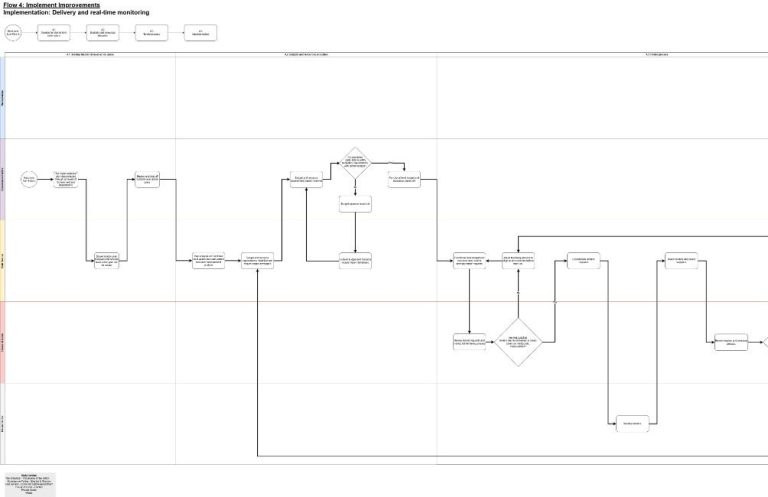
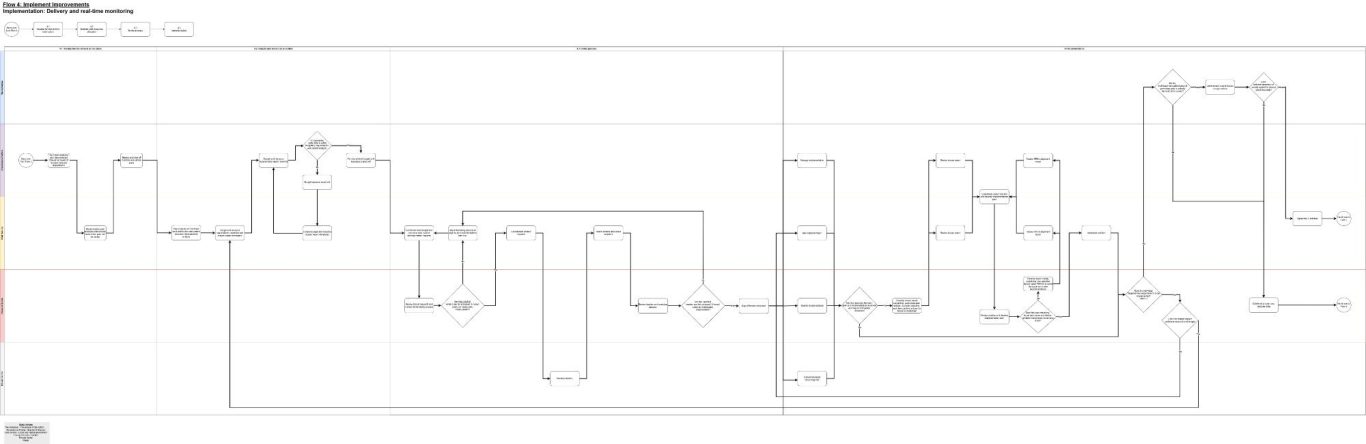
Then Resources and budgets are allocated and the plan is implemented
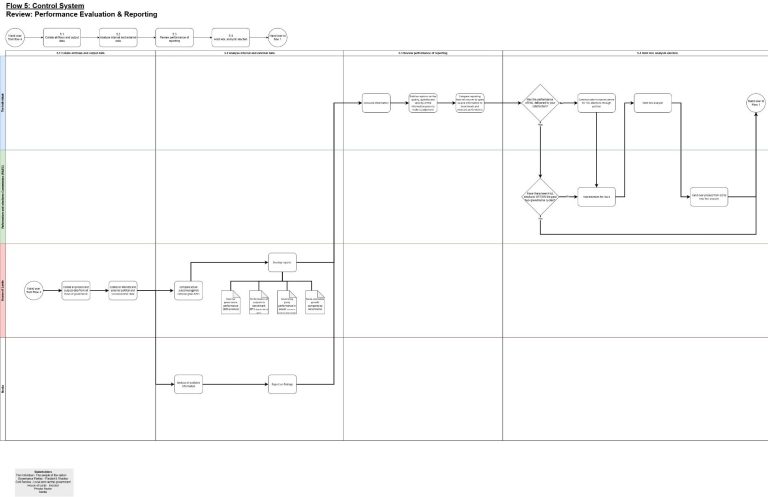
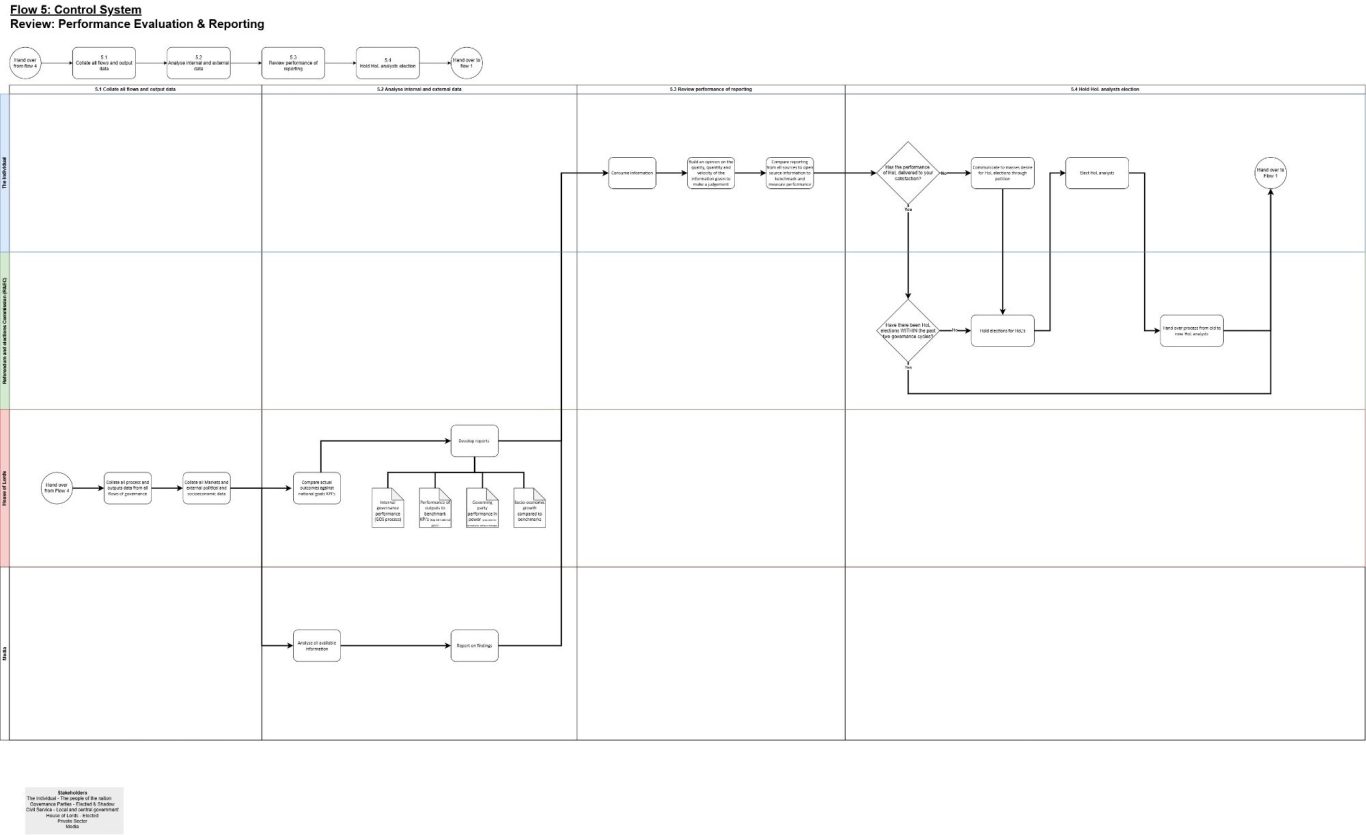
FInally, the whole process is reviewed and concisely disseminated to the people for their reflection on performance
Flow 0
The Overview
This flow shows the full process at it's highest level. When you look at the process steps you can see how the system is designed to claerly set the goals, define the vision of how we will get there, tur the vision into actionable plans, then implement the plan before finally reviewing the full scope and performance of the system. This aligns the purpose of governance to the people most accountable to it's outcomes and continuously review the efficiency of the system to this one key goal.
Flow 1: Define Strategy
Referendum: Set goals
The first step focuses on aligning people's experiences within the society to the aims of government by giving power back to the people by giving them the responsibility to set the goals for the nation
Flow 2: Measure Objectives
Elections: Set vision to achieve goals
Once the goals are set the governaning parties can focus their visions to the demands of the people ONLY. This is key because it removes influence away from the people's goals and so removes the influence of lobbying. Once we have an array of potential solutions, we then select the best options based on our desires and expectations of delivery.
Flow 3: Analyse Gaps & Planning
Resource planning: Set and sign off implementation plan to achieve vision
Once the people have selected a vision, the elected governing party will then work with the civil service to set an action plan with full resource and budget expectations
Flow 4: Implement Improvements
Implementation: Delivery and real-time monitoring
once the plans are set, they are disseminated throughout government and budget and resource planning can commence and then implemented and monitored in real time with triggers for corruption and dissatisfaction with performance so that the people are always in control
Flow 5: Control System
Review: Performance evaluation and reporting
The final stage is to review the full performance of the governing party which includes the internal processes as well as the actual outcomes of the changes made to society. This includes legislation that is measured against expected targets so allowing the people to fully judge their own goals and their selection process for the party they choose to take responsibility for their goals.
The Rules to PRRRA alignment
Direct Democracy needs explicit governance rules to empower the society to effectively evaluative the health of the system.
Process analysis needs to have some core fundamental rules that enable it to continuously evolve whilst focusing on driving accountability to negative behaviour and rewarding positive behaviour towards the end goal of social cohesion and growth
🔑 Rule Set 1 — Alignment Rules
Rule 1: Power–Accountability Alignment
Whoever has decision-making power must be accountable for outcomes
✔ Good:
- Government makes decisions → Government accountable
❌ Misalignment:
- Private sector makes key decisions but government takes blame
Rule 2: Responsibility–Control Alignment
Responsibility must sit with the actor who has operational control
✔ Good:
- Civil service responsible for delivery they manage
❌ Misalignment:
- Government responsible for outcomes it cannot control
Rule 3: Risk Ownership Rule
Risk must be owned by the actor best able to mitigate it
✔ Good:
- Delivery risk → contractors
- Policy risk → government
❌ Misalignment:
- Citizens bear risk of bad policy without control
Rule 4: Reward Alignment Rule
Rewards must incentivise the desired behaviour
✔ Good:
- Private sector paid for outcomes, not just activity
- Politicians rewarded (re-election) for delivery
❌ Misalignment:
- Short-term wins rewarded over long-term goals
Rule 5: No “Orphan Factors”
Every step must have all 5 factors explicitly assigned
If one is missing → governance gap
⚖️ Rule Set 2 — Democratic Integrity Rules
Rule 6: Strategy vs Execution Separation
- Citizens set goals (what)
- Government defines how
👉 Prevents technocracy OR populism dominating fully
Rule 7: Translation Fidelity
Party manifestos must trace directly to citizen goals
👉 Keeps the government focused on the issues the people have chosen:
- When government actions don't relate to people's needs, issues can build up into bubbles and hen they burst can cause pain or chaos to the system
Rule 8: Traceability Rule
Every delivered outcome must link back to:
- A manifesto commitment
- A citizen-defined goal
Rule 9: Feedback Integrity
Performance reporting must be:
- Independent
- Transparent
- Comparable over time
Rule 10: Time Consistency
Long-term goals must survive election cycles
👉 If goals are set by a few politicians and then completely undone by the next party in power, you never get to measure the actual efficacy of the actions towards that goal. Conistency is key!
- When people set the goals, the people decide when that goal is complete